Published: 10 June 2026
Thread by thread: Designing the future of textiles at School of Form
Author: Magdalena Miszewska
Sustainable textiles can be programmed from the ground up, and raw wool turns is an excellent material for robotic fabrication. During an international workshop held at School of Form, SWPS University students from Poland, France, Lithuania, and Germany explored how emerging technologies can reshape the way we think about textile design.
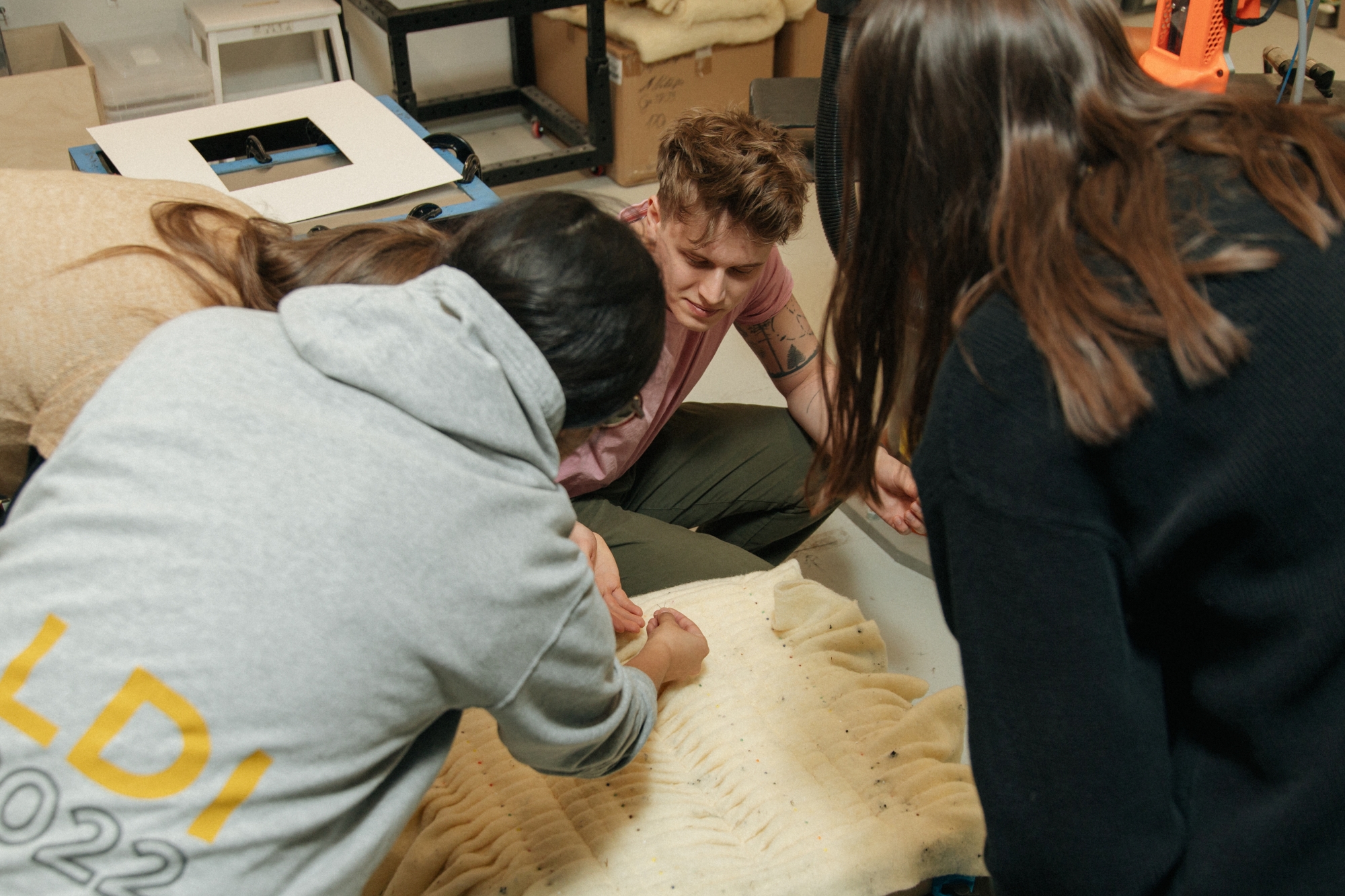
When traditional craft meets new technology
The workshop focused on needle felting—a technique that bonds fibers together using specially designed barbed needles, without the need for additional binding materials. Although it is one of the world's oldest textile-making methods, participants approached it from an entirely new angle.
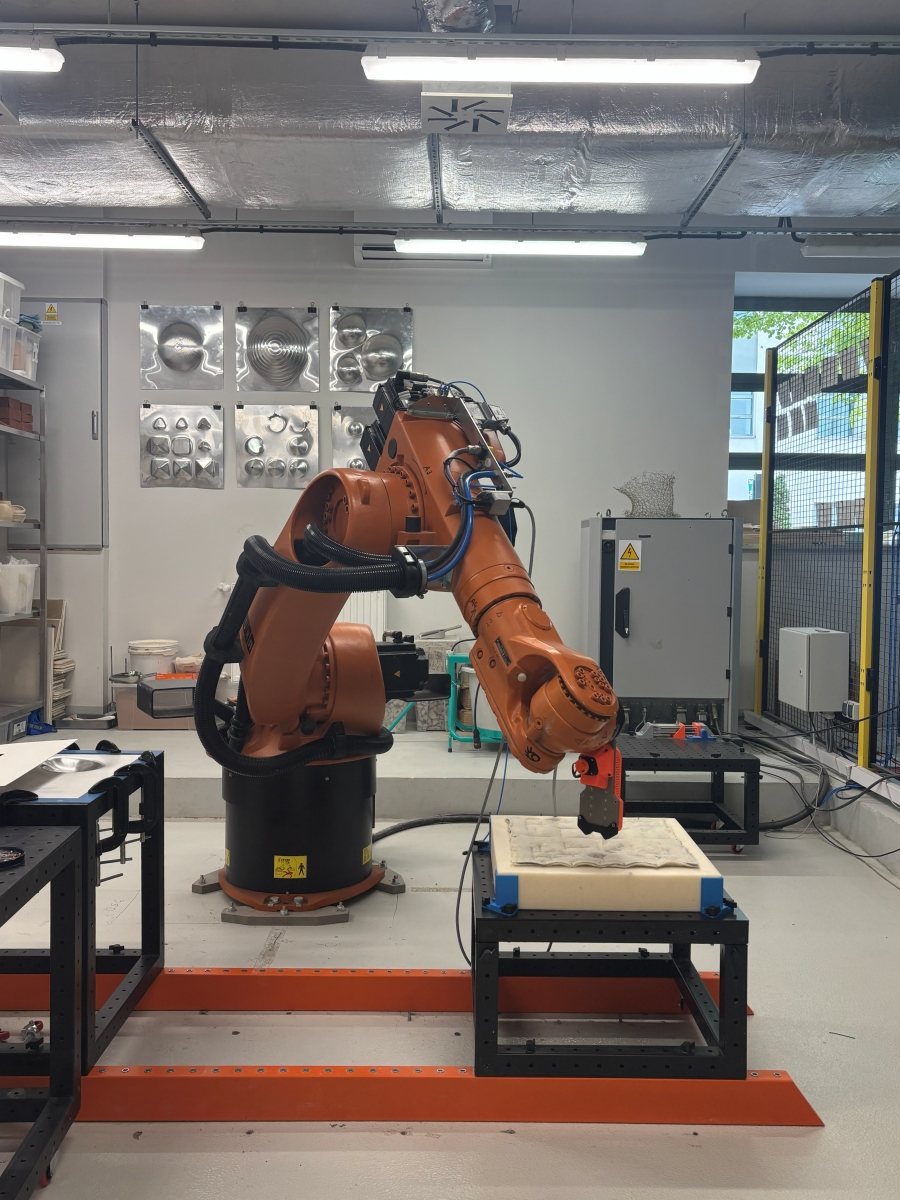
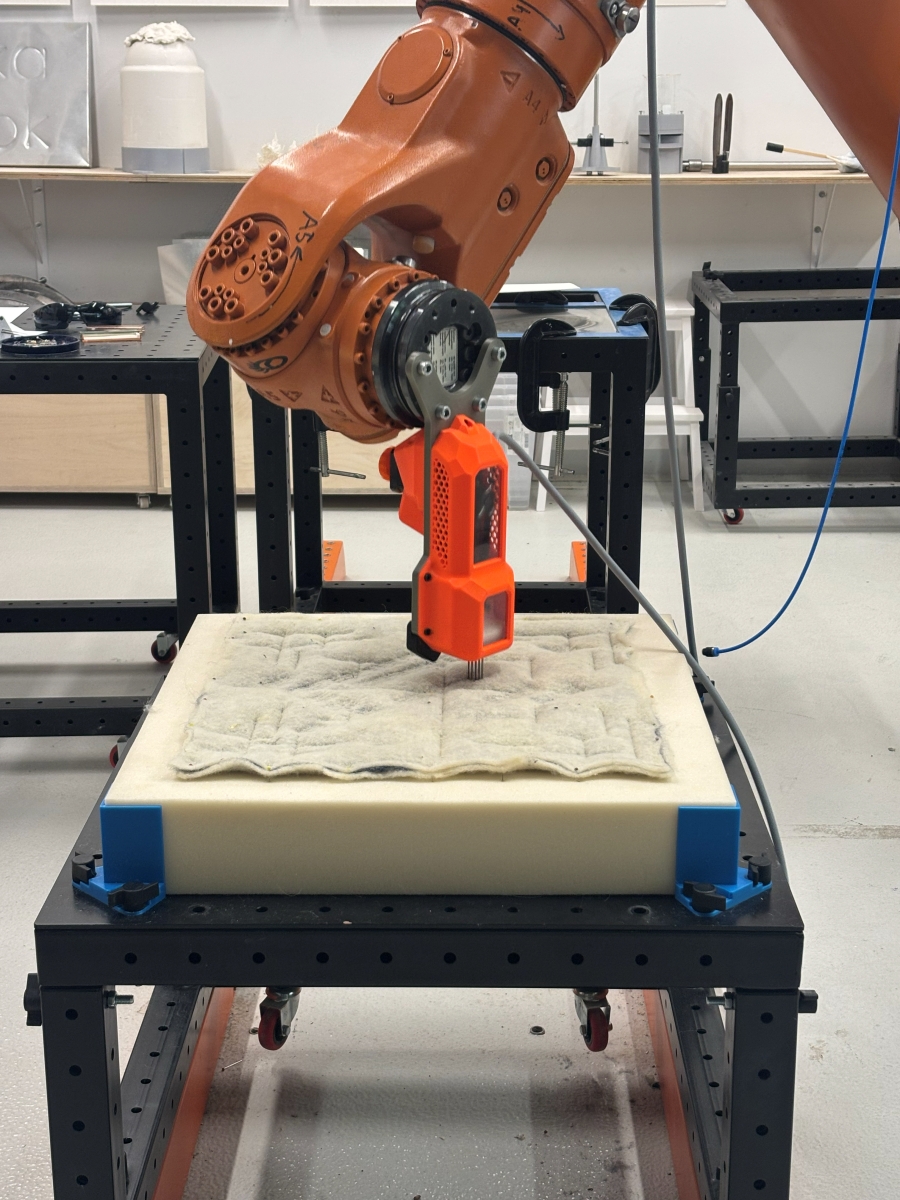
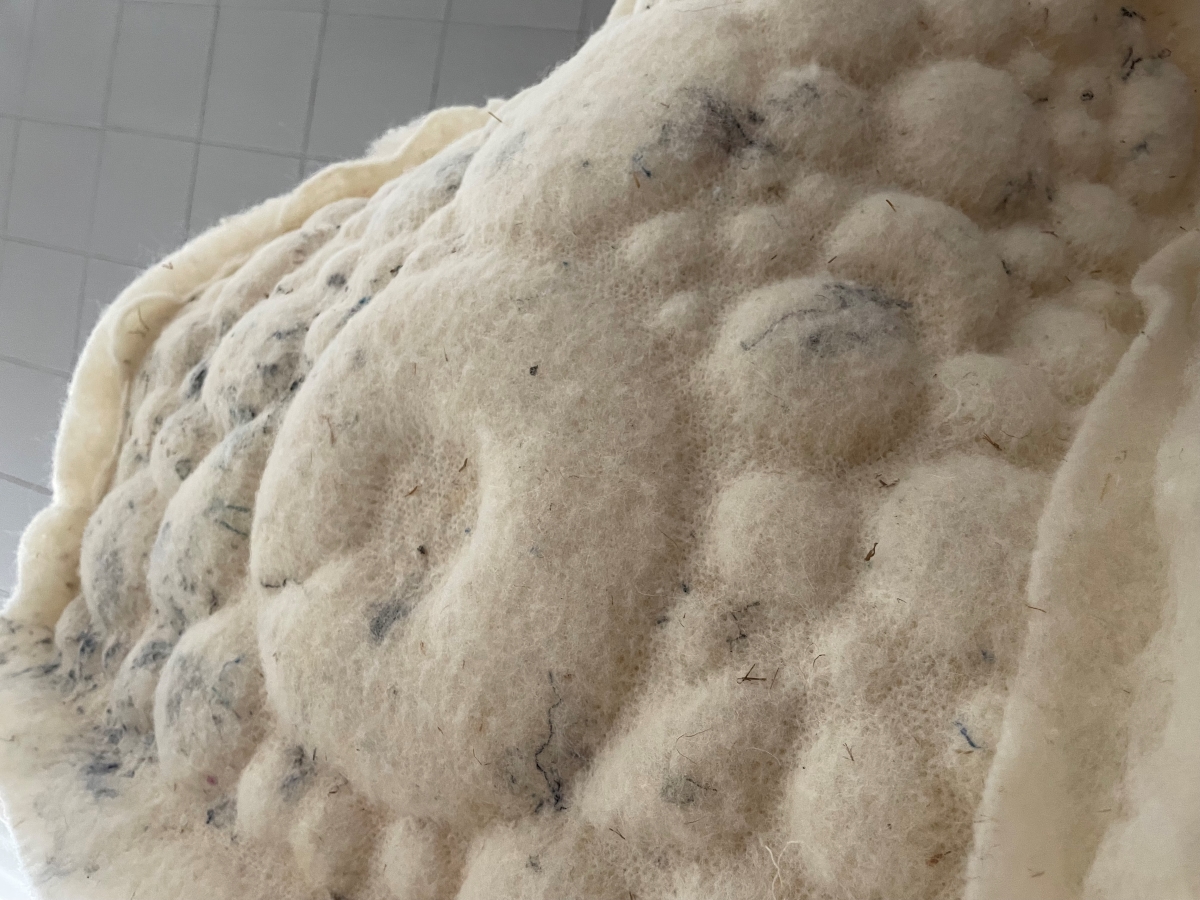
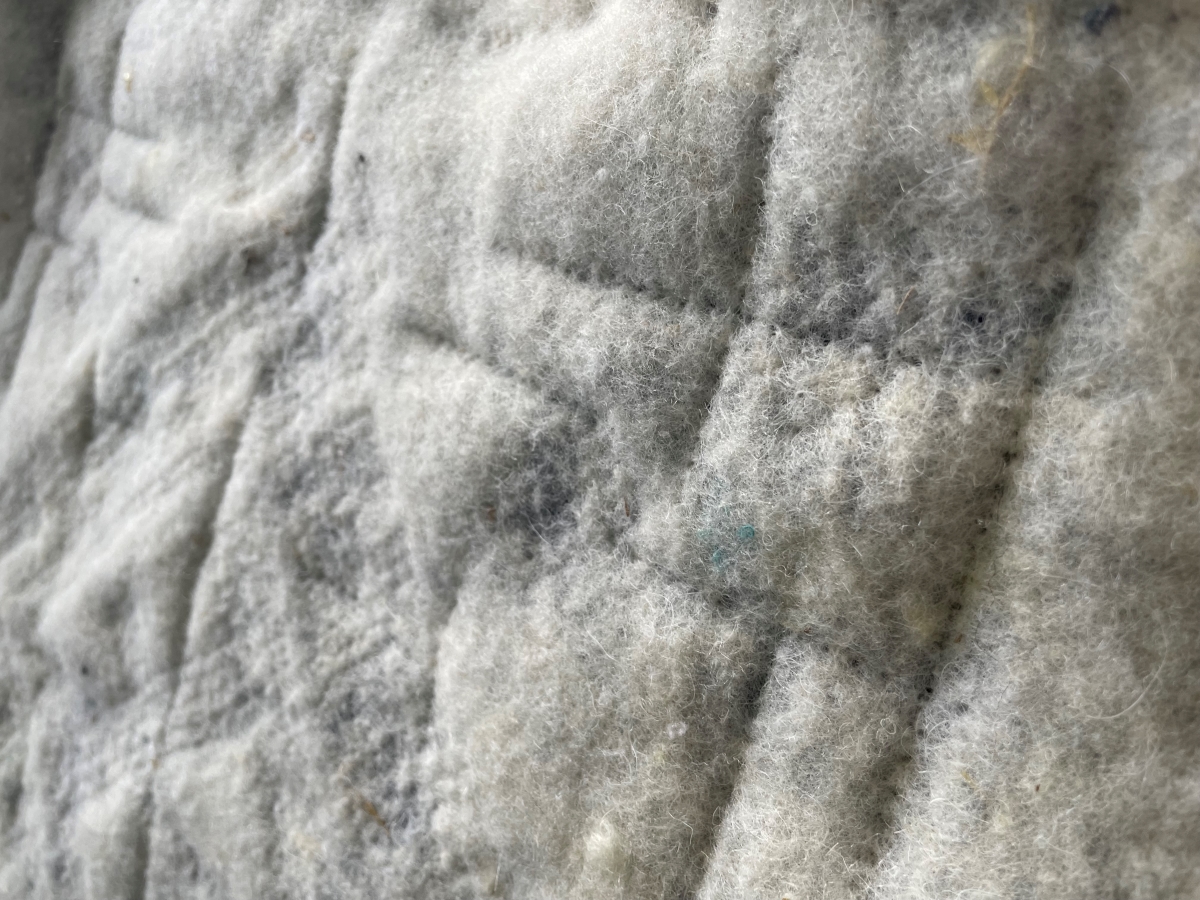
Using digital tools and robotics, they programmed the movements of a robotic arm to precisely control how fibers were distributed throughout the fabric. This process made it possible to create structures with varying properties—softer or stiffer, denser or looser, more opaque or more translucent.
From origami to coding
The workshop was not about following a predefined set of instructions. Instead, it was built around experimentation, discovery, and testing. The path from idea to prototype unfolded through a series of hands-on design explorations.
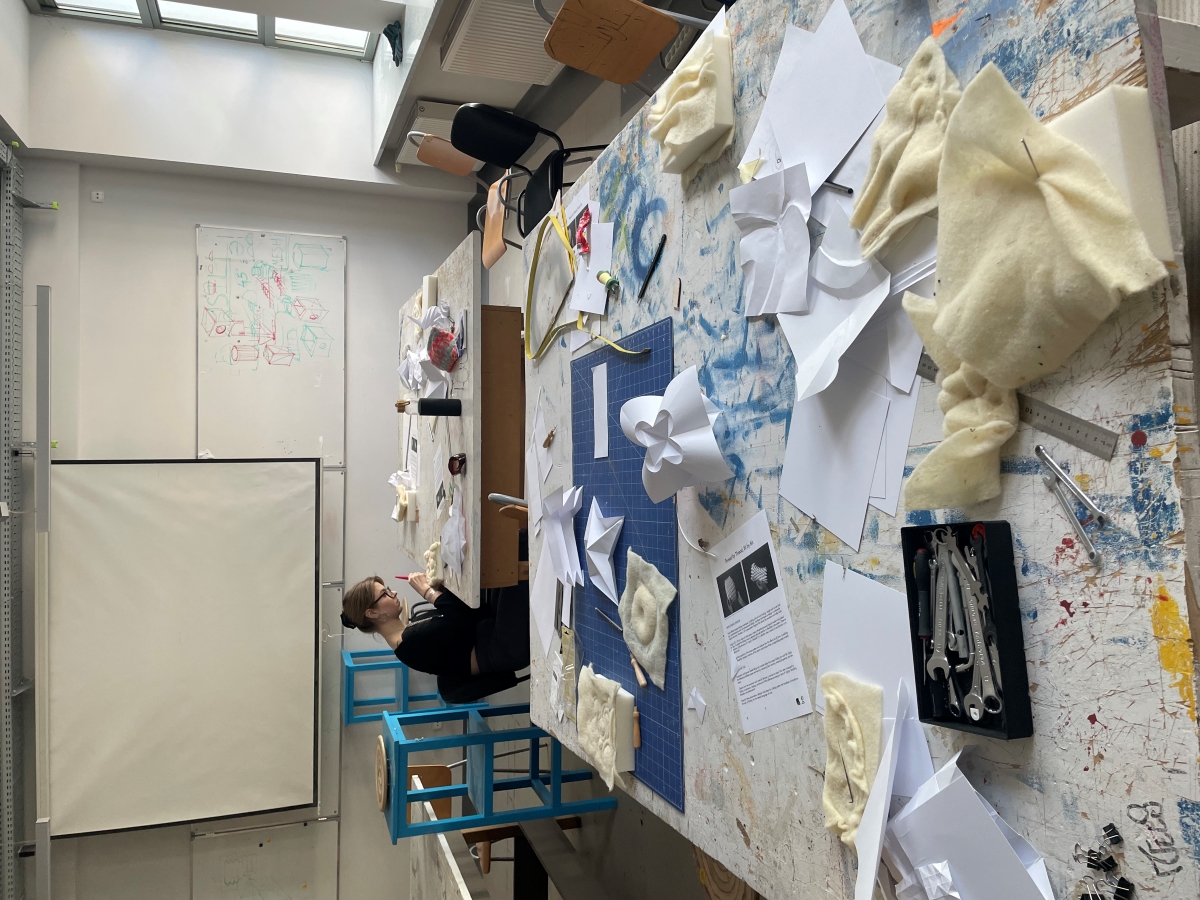
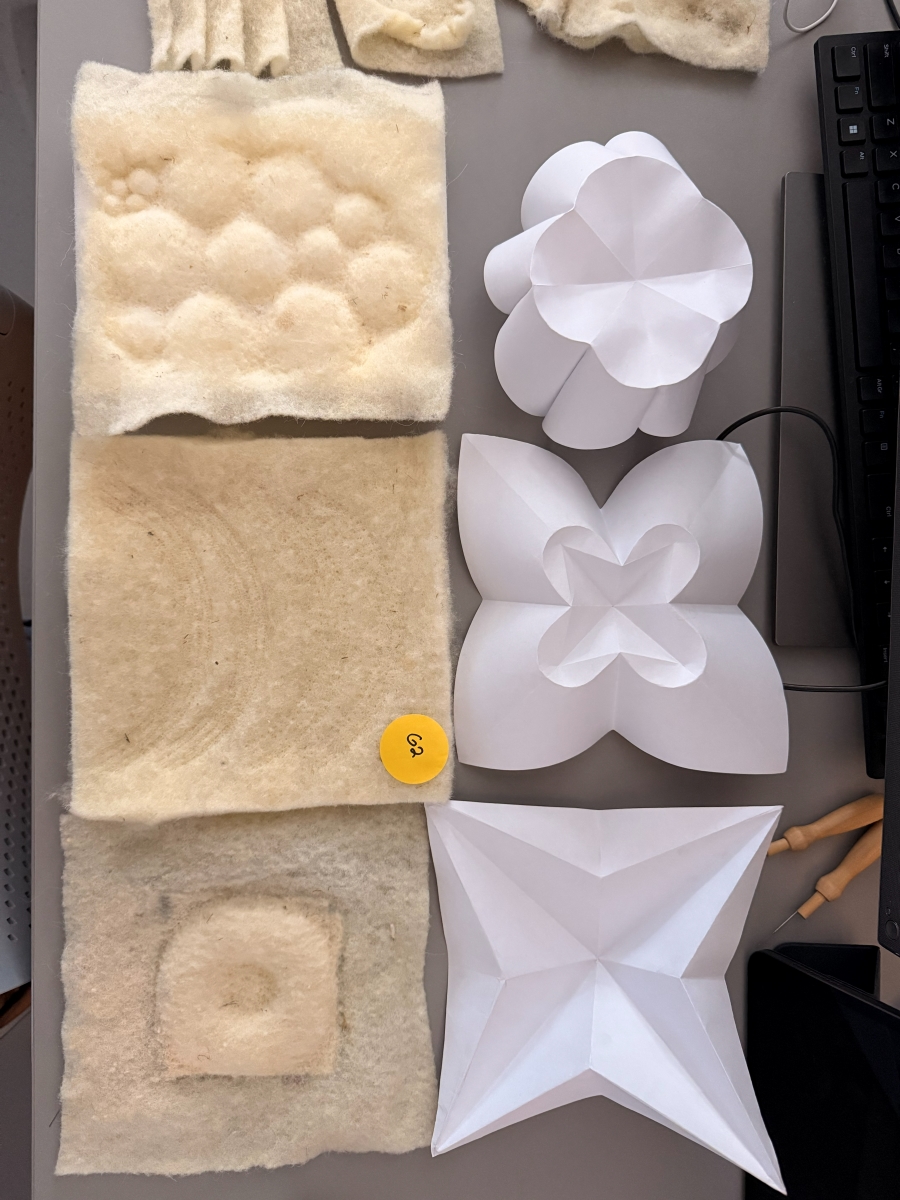
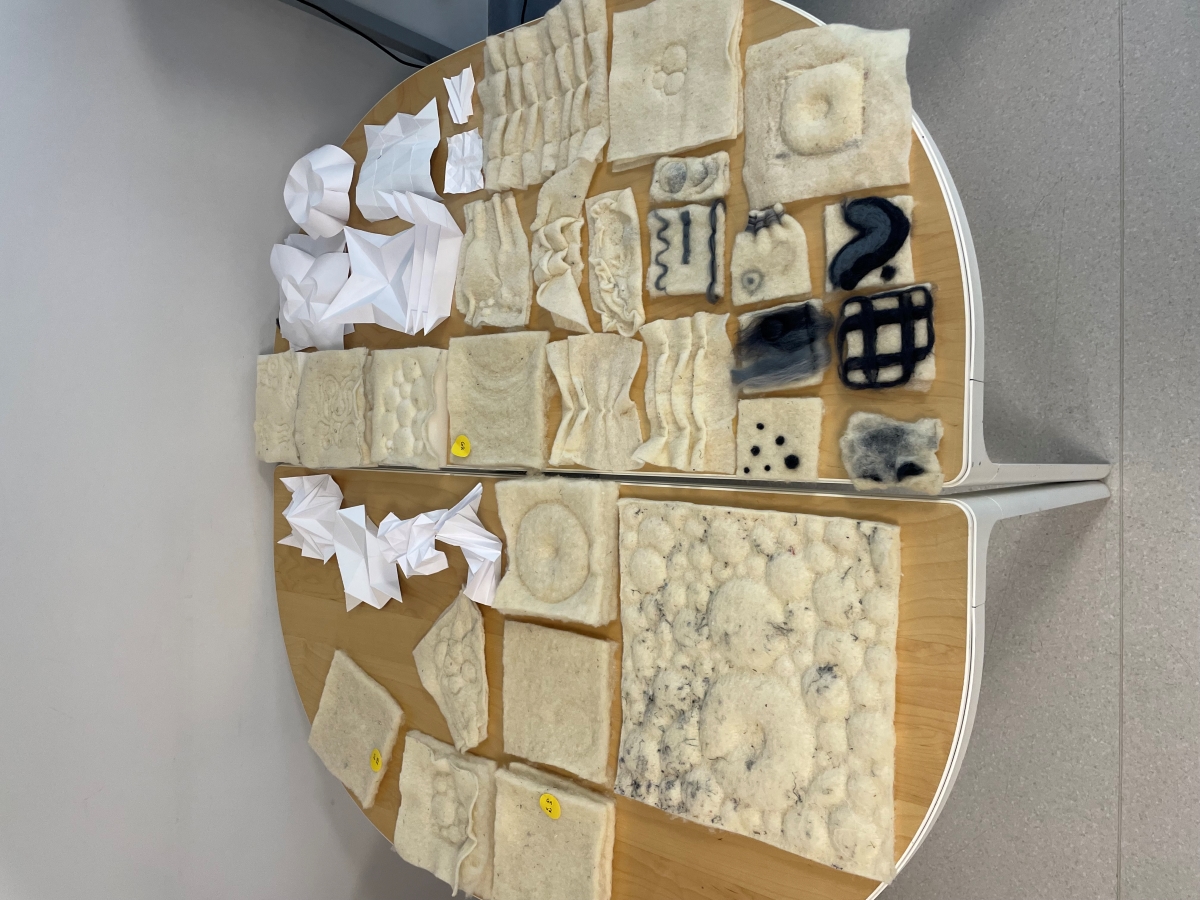
Participants started with a lecture on felting, which served as the theoretical foundation for the workshop. Next, they used origami techniques to explore how fold lines influence the physical structure of a fabric.
The next stage focused on experiments with fabric. Students translated their early concepts into physical forms, developing them further through prototyping sessions and design consultations.
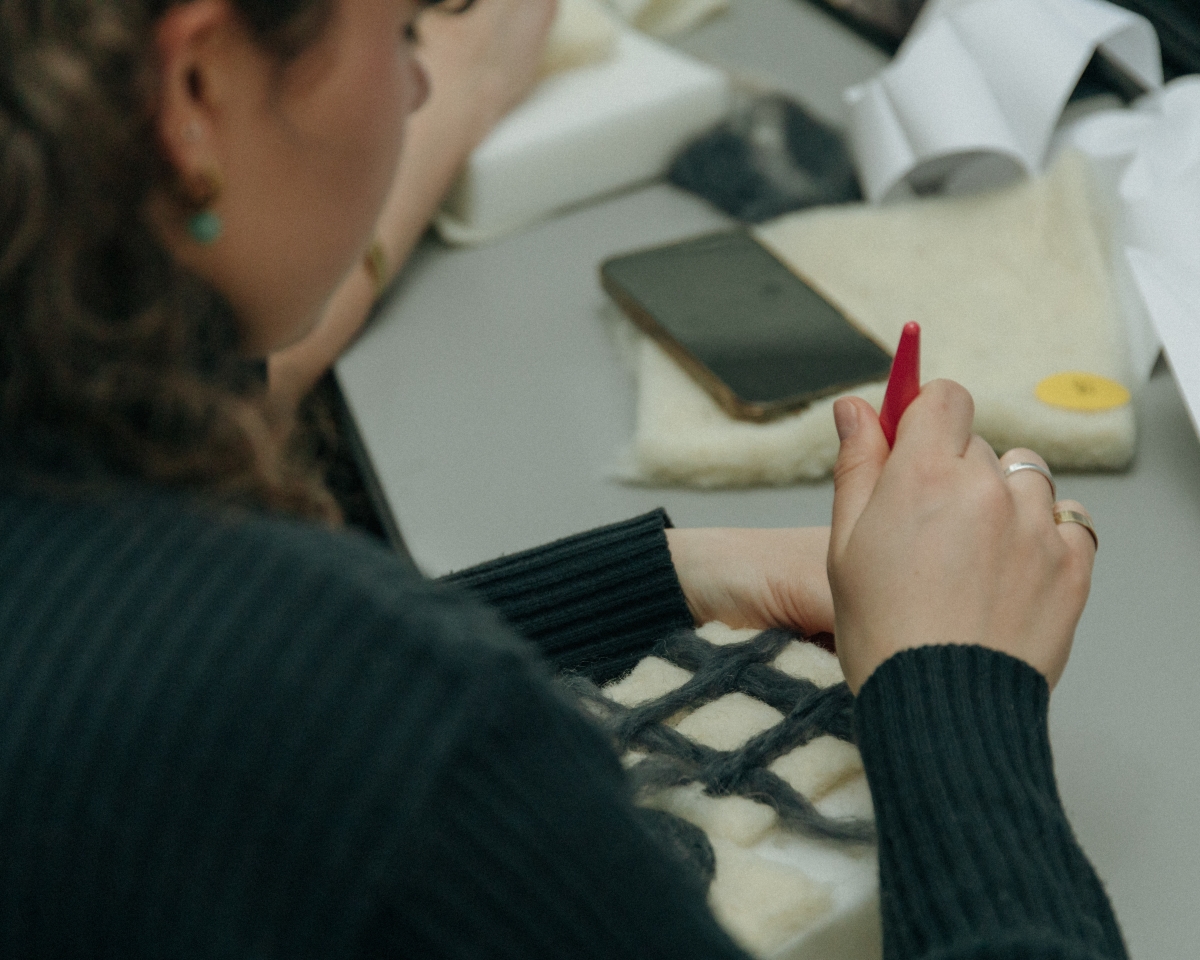
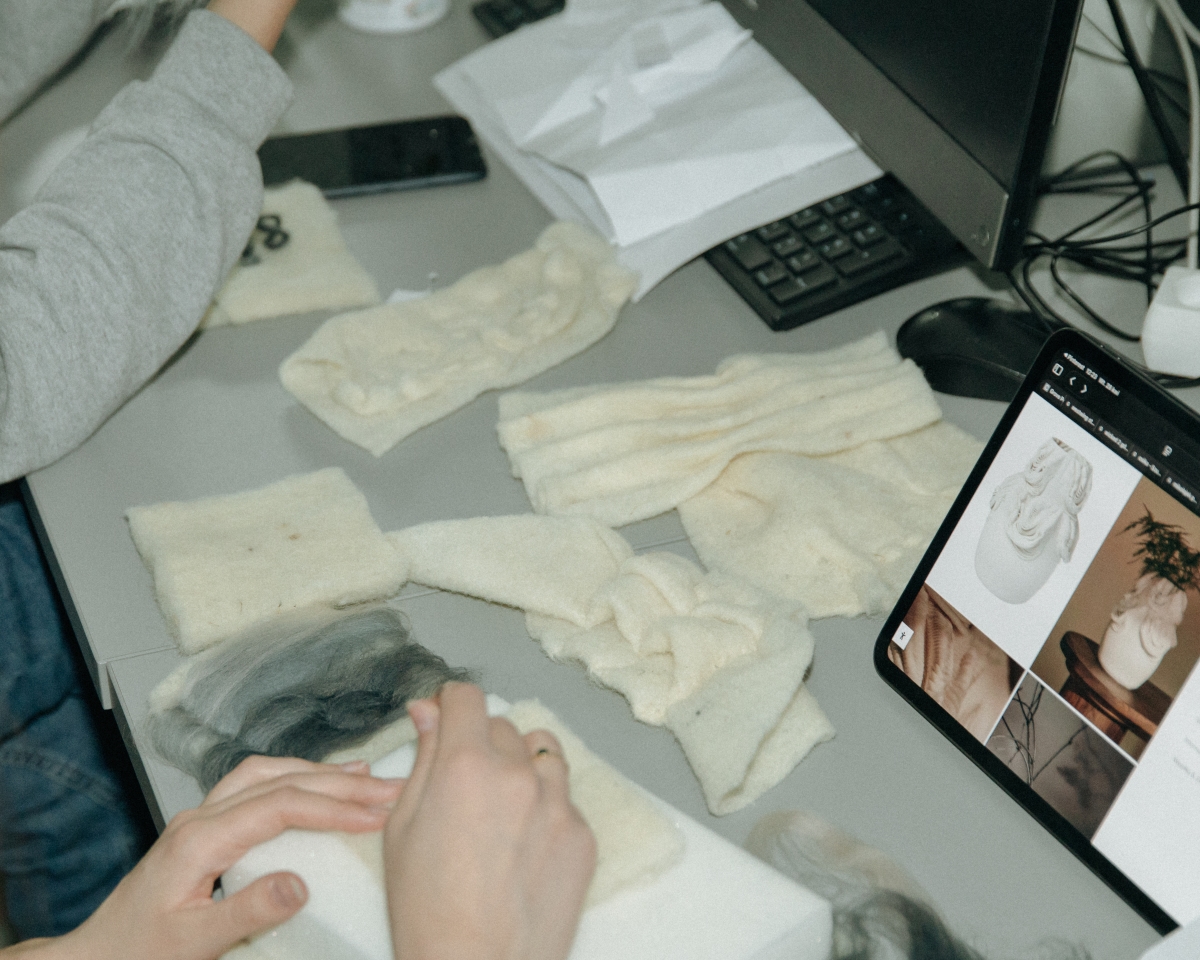
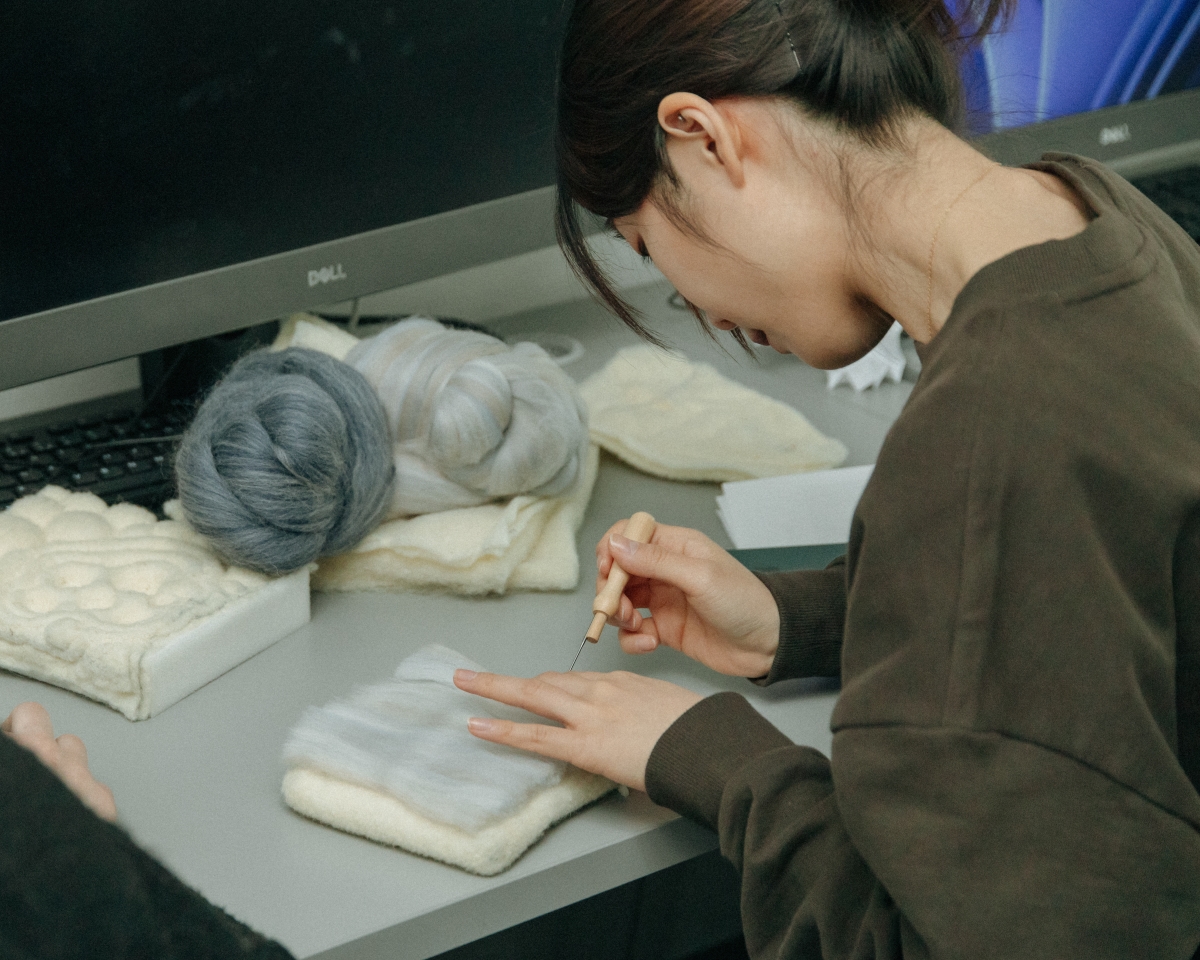
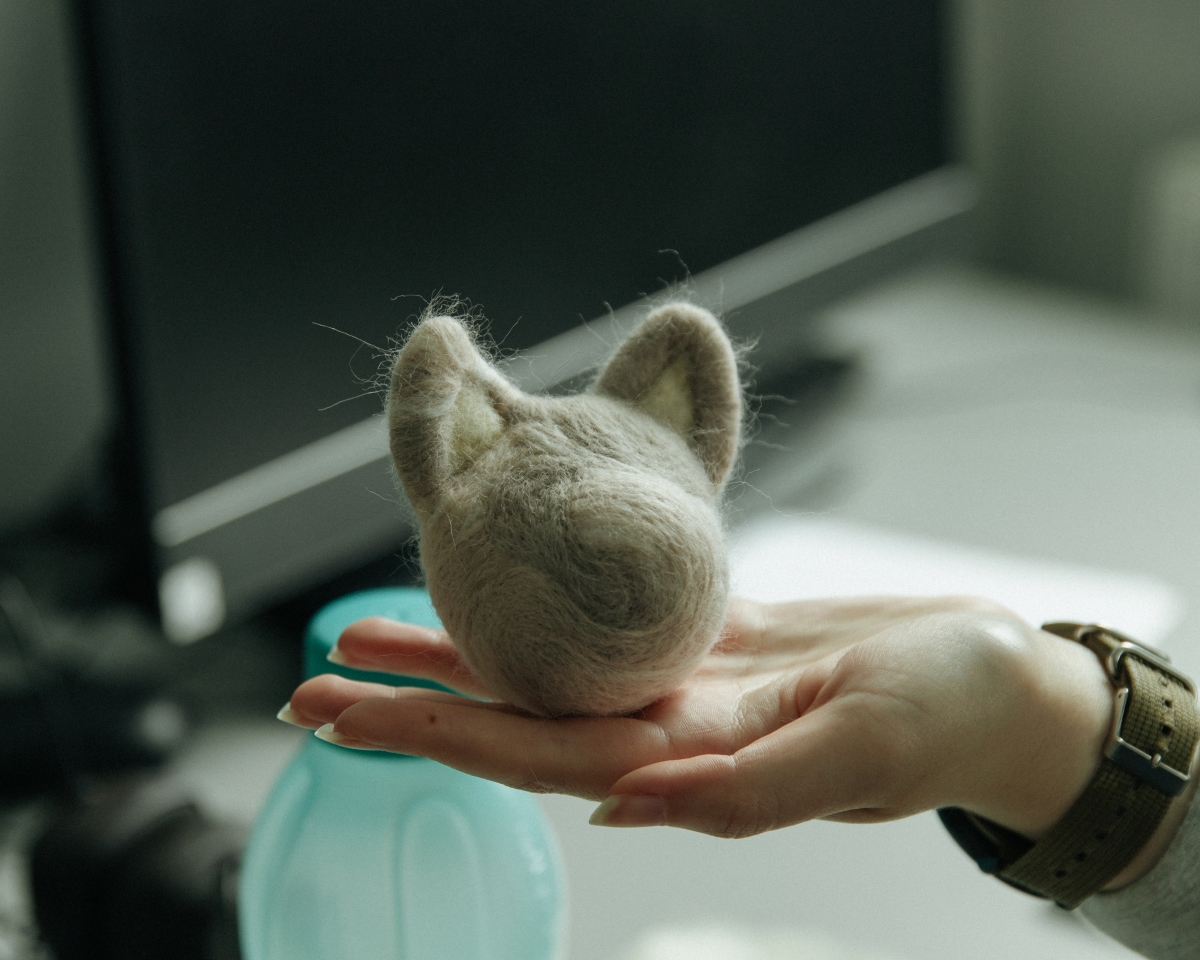
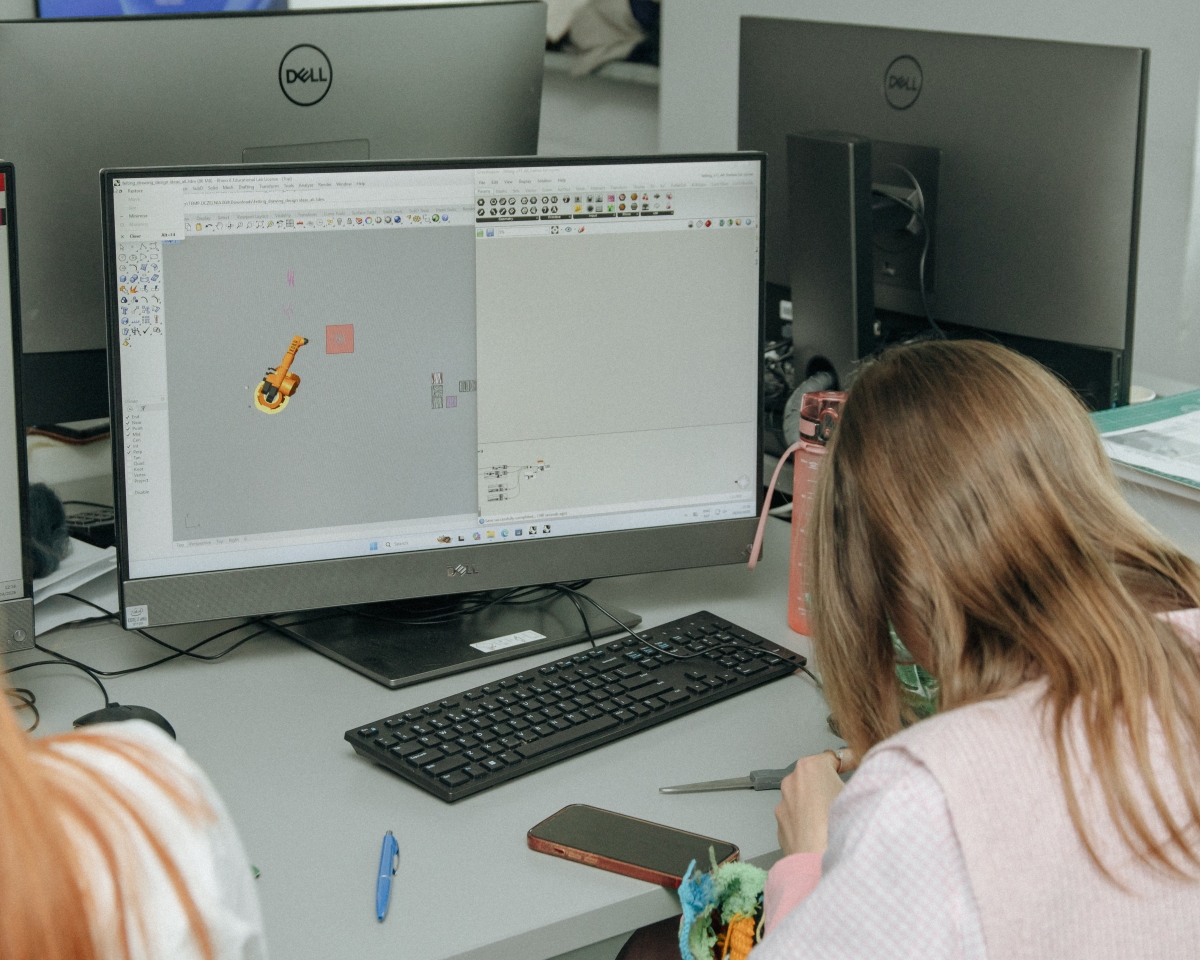
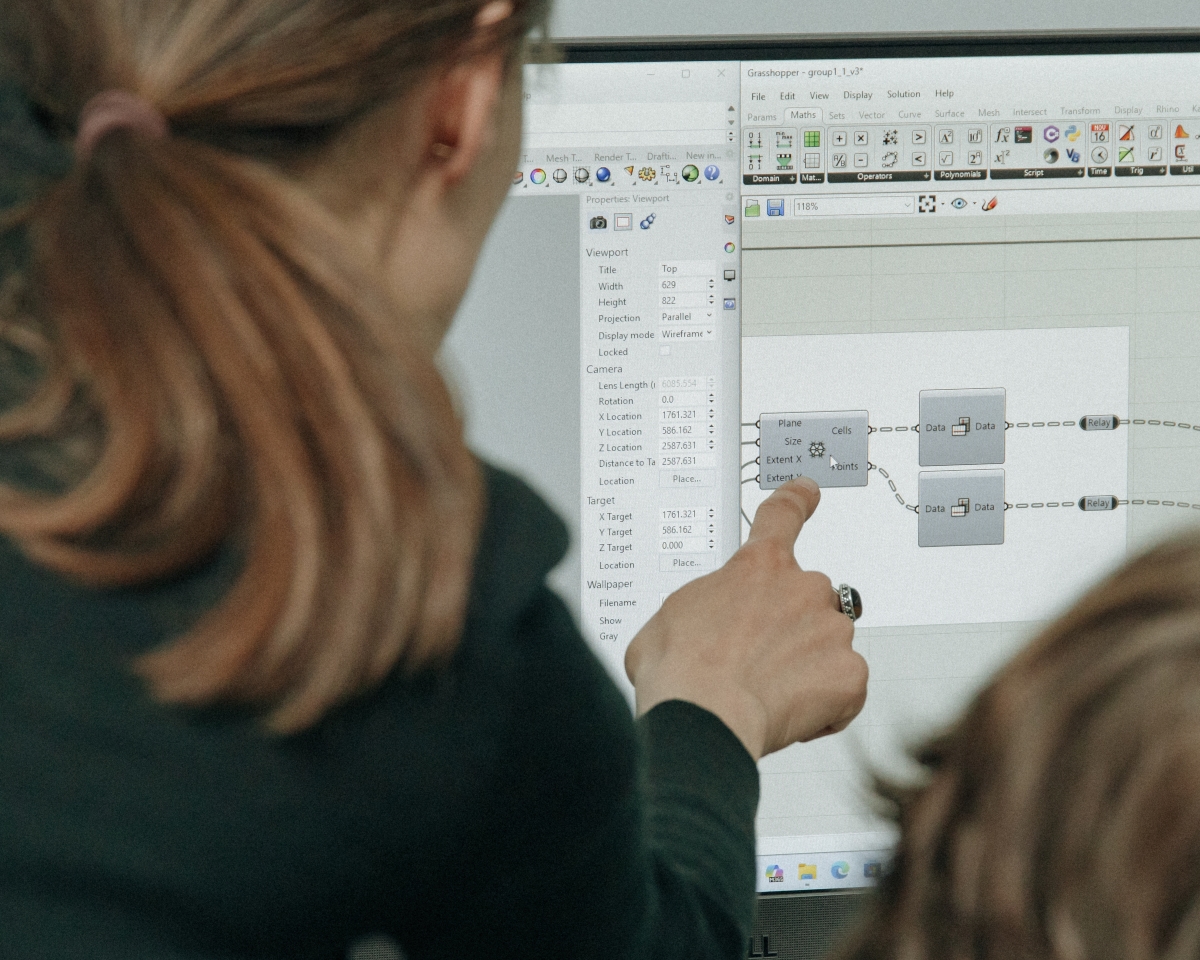
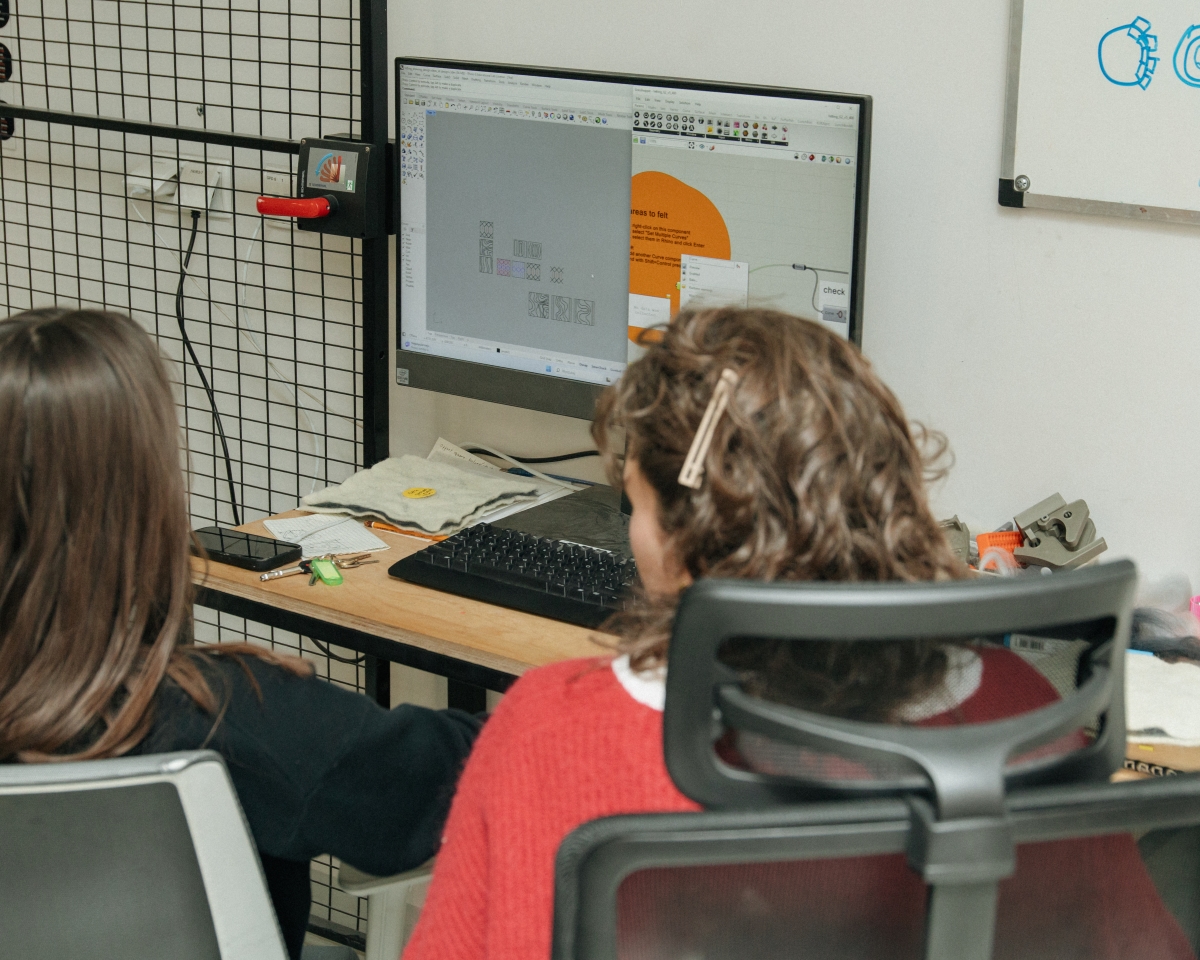
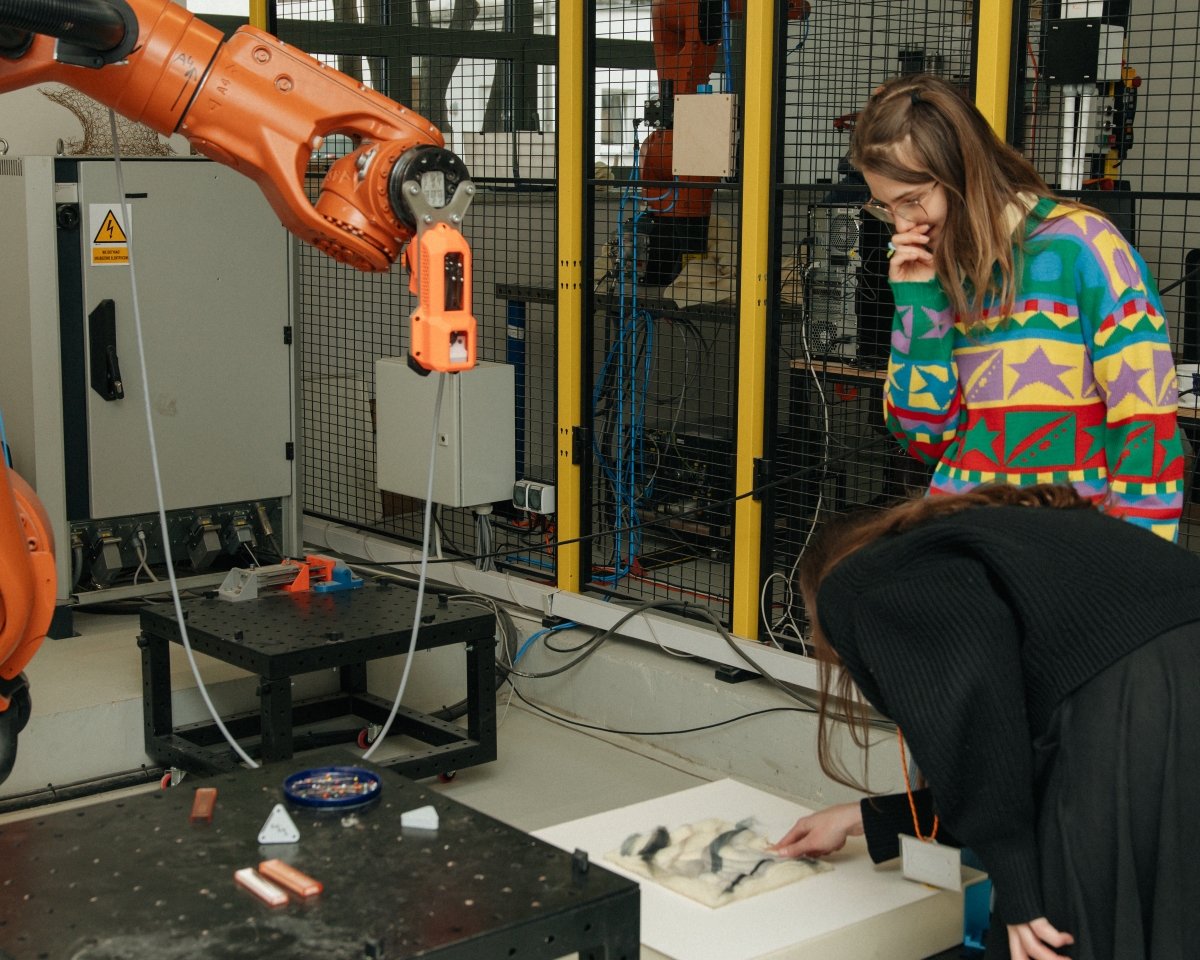
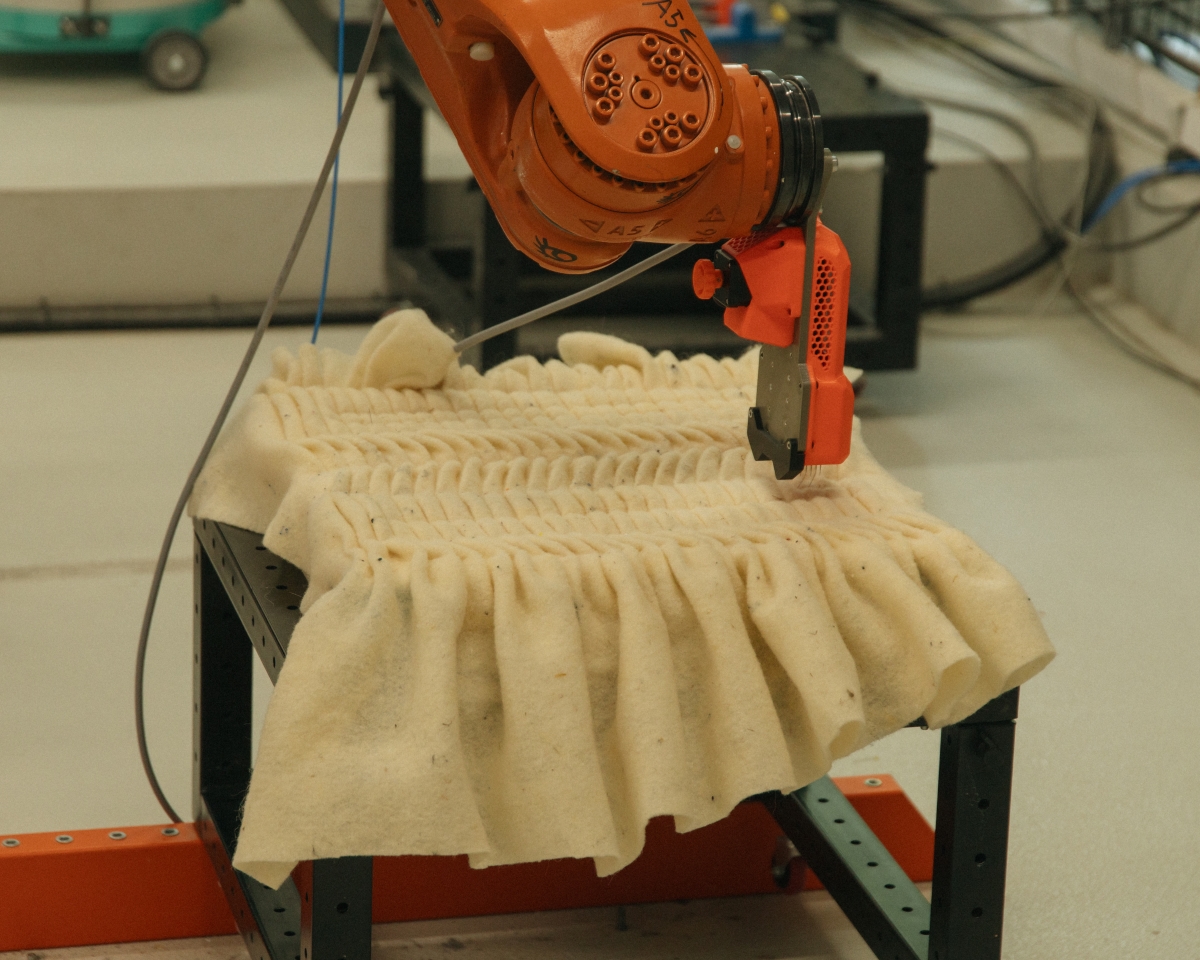
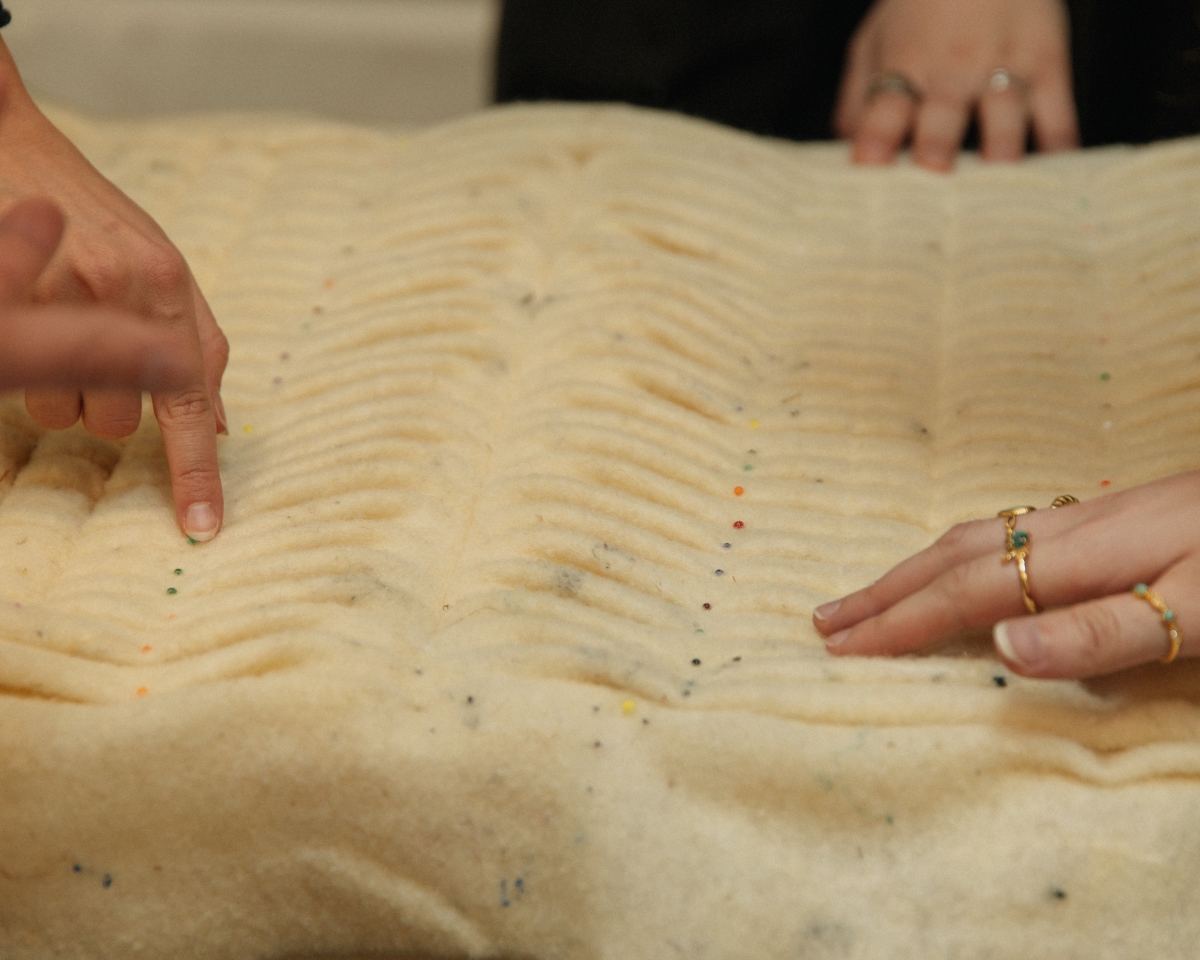
The most intensive part of the workshop took place in the KUKA lab, where a robotic arm felted wool according to parameters programmed by the students. They worked in small groups under the guidance of Agata Kycia and Sara Boś.


Collaborating in international, interdisciplinary teams gave us a space to collectively explore the possibilities of parametric design and robotic fabrication. The ultimate challenge lay in programming the robot's motion path to transform a digital model into a physical felt structure. With every iteration, participants gained a deeper understanding of how material, form, and code interact.
Sara Boś
Lecturer at School of Form
The workshop concluded with project presentations and a group discussion reflecting on the outcomes of the process. The result was a collection of concepts and prototypes demonstrating how robotic needle felting can support the development of new, more sustainable materials for design.
Learning through international exchange
The "Thread by Thread, Bit by Bit" workshop took place in late April as part of the Erasmus Blended Intensive Programme (BIP), a format that combines online learning with intensive in-person collaboration.
Participants included students from School of Form as well as L'École de design Nantes Atlantique, Vilnius Academy of Arts, and Universität der Künste Berlin. Beyond the design work itself, the workshop created an opportunity to exchange ideas, share perspectives, and collaborate across disciplines and cultures—an essential part of contemporary design practice.
Workshop supervision
